Skid Steer Mulchers: Transforming Land Clearing Efficiency
Clearing dense vegetation and unruly timber from a massive plot of land has historically been one of the most physically exhausting and financially draining phases of any site development project. When contractors rely on outdated methods like manual chainsaw felling, controlled burns, or heavy bulldozing, project timelines stretch indefinitely, and labor costs skyrocket. You need a powerful, mechanized solution that dominates the brush without destroying your operational budget or requiring a fleet of specialized support vehicles.
A skid steer mulcher represents the ultimate evolution of modern land clearing equipment. By combining the unmatched maneuverability of a compact loader with the devastating shredding power of a rotary drum, this attachment completely revolutionizes how professionals manage overgrown environments. This comprehensive guide explores the profound impact of mulching technology on your daily operations. We will examine exactly how these attachments work, their diverse applications across multiple industries, and the critical maintenance practices required to protect your investment and guarantee unyielding reliability for your clients.
Understanding the Mechanics of the Skid Steer Mulcher
The heavy construction industry constantly demands higher output with less manual effort. The severe operational limitation many land management professionals face is the massive bottleneck created by traditional tree removal. Felling a tree is only the first step; crews must then limb the branches, cut the trunk into manageable pieces, load the heavy wood into dump trucks, and pay exorbitant fees to dispose of the green waste at a commercial facility. This multi-step process destroys efficiency and severely limits the number of acres a crew can clear in a single day.
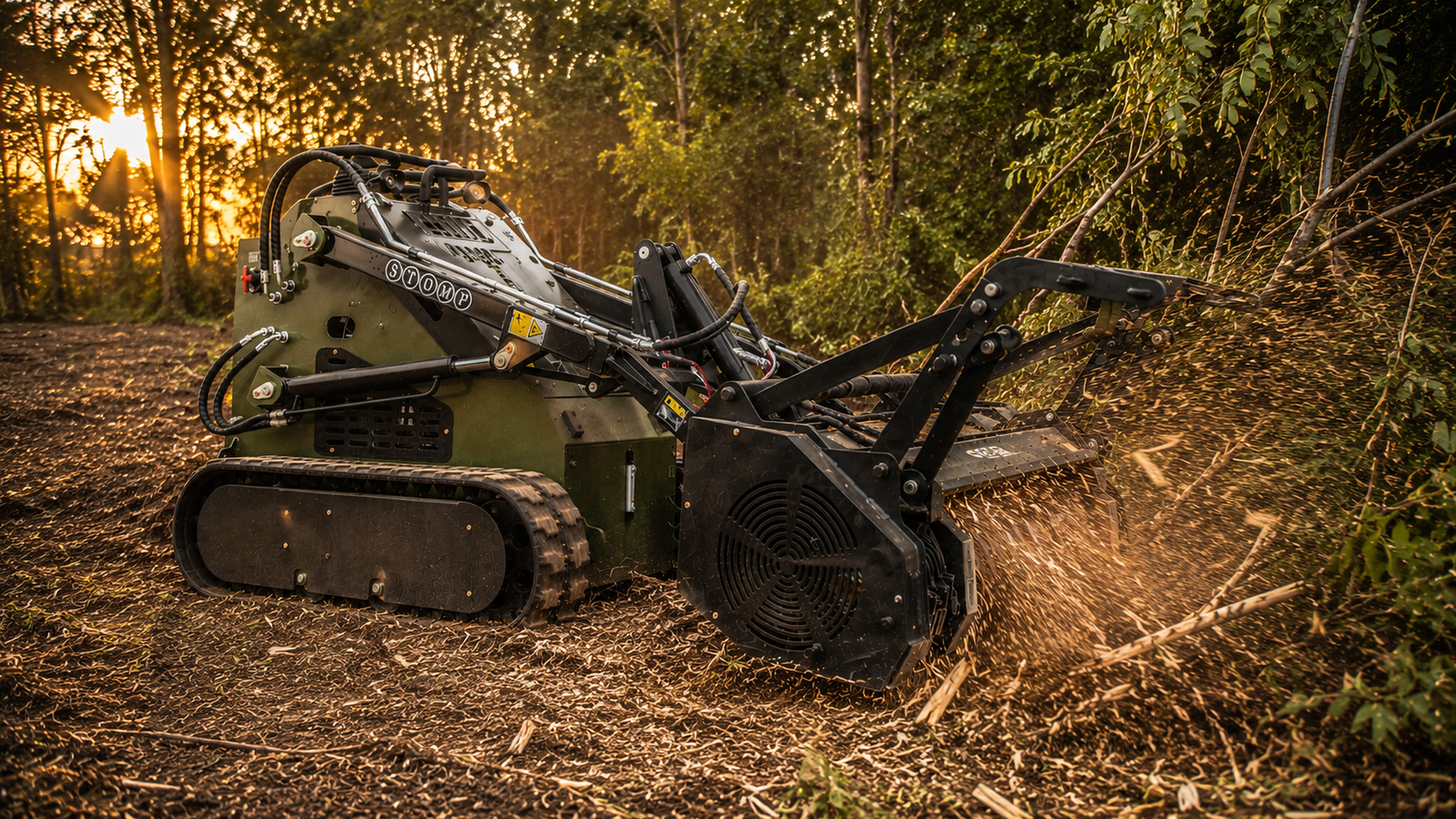
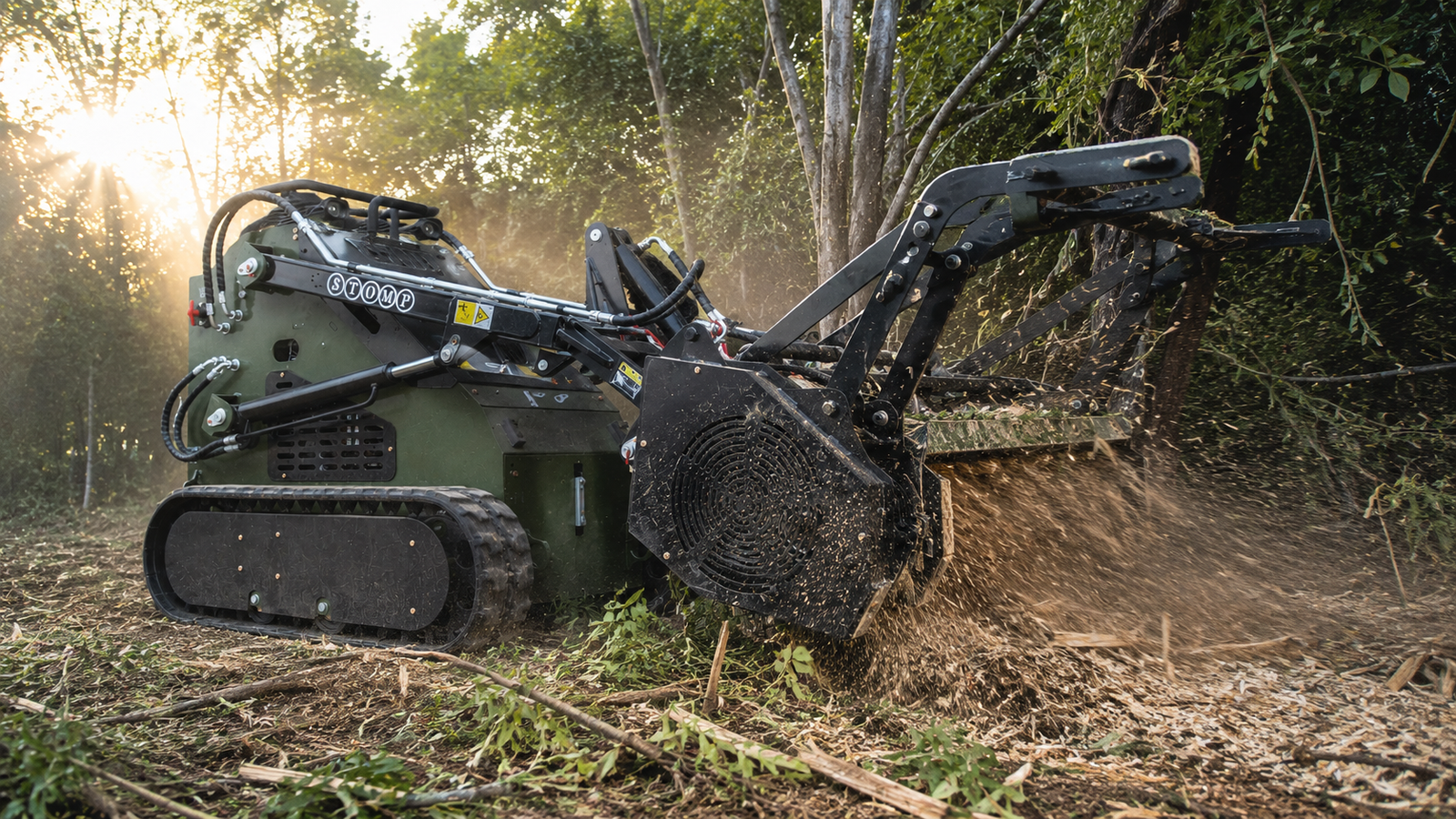
A skid steer mulcher completely bypasses this logistical nightmare by reducing the entire tree to a bed of fine wood chips in a matter of seconds. This powerful implement features a heavy, balanced steel drum studded with carbide-tipped or hardened steel teeth. Driven by the compact loader’s high-pressure hydraulic system, the drum spins at incredible speeds, violently aggressively chewing through thick brush, heavy vines, and standing trees. As the operator drives the machine forward, the mulcher attachment pulls the vegetation into the cutting chamber, instantly pulverizing the wood and discharging the shredded material directly back onto the forest floor.
The real-world impact of this single-step clearing method is absolutely staggering. A single operator sitting in the safety of a climate-controlled cab can process acres of dense woodland that would typically require an entire crew of laborers wielding chainsaws. By eliminating the need for hauling trucks and commercial disposal fees, your contracting business deeply protects its profit margins while finishing the job significantly ahead of schedule. Achieving this level of profitability naturally highlights the broader environmental and financial advantages of the technology.
The Financial and Environmental Advantages of Mulching
Property developers and landowners are becoming increasingly sensitive to the environmental impact of aggressive heavy machinery. A major problem with traditional land clearing equipment, such as heavy bulldozers, is that they indiscriminately rip massive tree roots out of the earth. This aggressive soil disturbance completely ruins the structural integrity of the ground, leading to severe topsoil erosion the moment the first heavy rainstorm hits the property. Furthermore, relying on controlled burns to eliminate massive slash piles introduces dangerous liability risks and triggers strict regulatory hurdles that can delay a project for months.
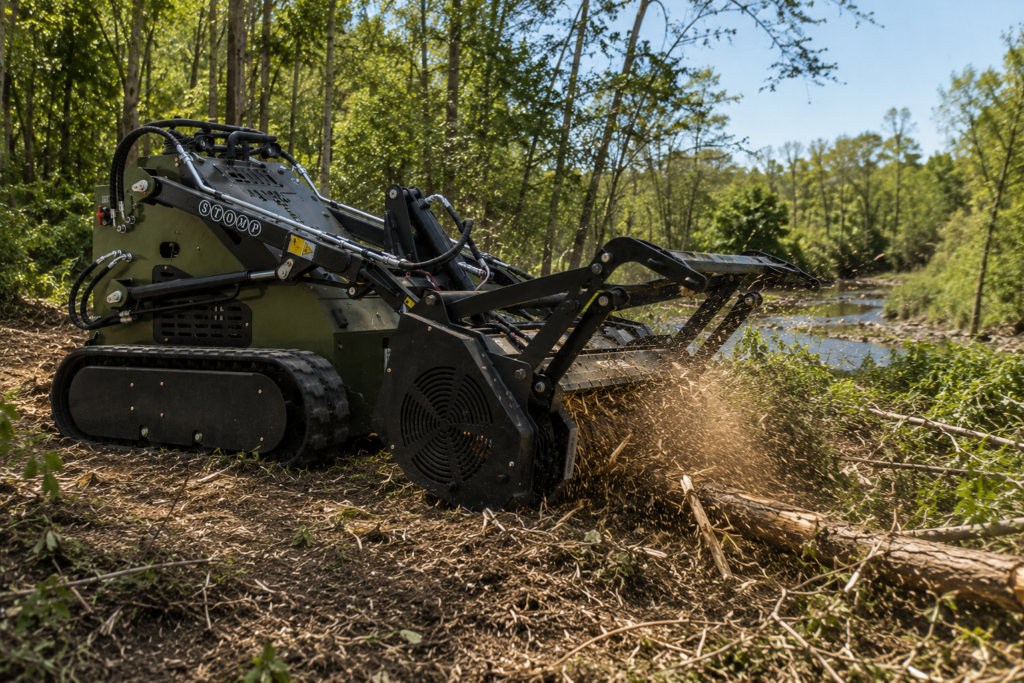
Deploying a skid steer mulcher provides a deeply responsible, highly profitable alternative to these destructive clearing methods. Because the mulcher shreds the vegetation from the top down, the root systems remain completely intact beneath the soil surface. This preserves the structural integrity of the earth and completely prevents devastating erosion. The shredded wood chips are left on the ground, creating a protective, nutrient-rich mulch layer that naturally suppresses future weed growth and retains vital ground moisture.
This environmentally conscious approach serves as a massive selling point when bidding on competitive land management contracts. Clients deeply appreciate contractors who can clear their land cleanly and responsibly without leaving behind massive, unsightly burn scars or heavily rutted topsoil. The financial impact is equally profound; you complete the job faster, eliminate expensive hauling logistics, and secure a reputation as a highly professional, forward-thinking enterprise. This reputation opens the door to highly lucrative contracts across a wide variety of professional sectors.
Diverse Applications Across Forestry, Agriculture, and Construction
Heavy equipment is often engineered for highly specific, narrow environments, severely limiting its overall financial value to a growing contracting business. If you purchase a machine that can only perform one specific task on a commercial construction site, that asset sits entirely idle when you transition to an agricultural or forestry project. When expensive machinery sits unused in the staging yard, it actively drains your working capital and stifles your company’s potential for expansion.
The skid steer mulcher serves as the ultimate multi-industry problem solver, perfectly adapting to completely different professional environments. In the forestry sector, these attachments are heavily relied upon to cut vital firebreaks, manage aggressive undergrowth, and clear dense timber stands for recreational trail development. In the agricultural industry, farmers utilize mulchers to reclaim overgrown pastures, push back aggressive fence lines, and clear thick brush from critical irrigation ditches. For commercial construction, they provide the fastest possible method for early site preparation, rapidly clearing the initial footprint before the heavy earthmoving equipment arrives.
This incredible operational versatility ensures that your compact loader remains actively deployed and continuously generating revenue throughout the entire year. By offering professional mulching services, your contracting business can aggressively pivot between different industries as seasonal demands shift. You secure a deeply resilient business model that thrives regardless of minor economic fluctuations in any single sector. Capturing this universal demand, however, requires ensuring your machine possesses the actual hydraulic capability to run the tool.
Choosing the Right Mulcher Attachment for Your Skid Steer
The compact equipment market is saturated with dozens of different forestry attachments, all claiming to deliver superior cutting performance. A critical, incredibly expensive mistake equipment buyers make is purchasing a heavy-duty mulcher based solely on its physical cutting width, completely ignoring the internal hydraulic reality of their loader. Connecting a massive, high-demand forestry head to a standard-flow skid steer guarantees severe hydraulic stalling, excessive heat generation, and the eventual catastrophic failure of the machine’s internal pumps.
Choosing the right mulcher attachment for a skid steer requires a strict, mathematical alignment between the loader’s hydraulic output and the tool’s engineering requirements. You must carefully verify your machine’s exact gallons per minute (GPM) and operating pressure (PSI). Most commercial-grade mulchers require a high-flow hydraulic system to maintain the necessary drum speed when the teeth bite into thick, solid oak. Furthermore, you must evaluate the cutting teeth options; smooth carbide teeth provide immense durability for rocky environments, while sharp steel knives deliver unparalleled speed in clean, rock-free timber.
Matching the attachment perfectly to your machine’s capabilities ensures smooth, unyielding performance in the field. Your operator will experience rapid recovery times when the drum bogs down, allowing them to confidently push through the thickest vegetation without constantly stalling the engine. This calculated purchasing decision protects your expensive hydraulic components and guarantees your equipment operates exactly as the manufacturer intended. Preserving this peak performance relies heavily on how the operator treats the machine after the engine is turned off.
Maintenance Best Practices for Unyielding Performance
A forestry mulcher operates in one of the most physically brutal, highly abrasive environments imaginable, constantly battling dense wood, hidden rocks, and thick, suffocating dust. Many contractors fall into the dangerous habit of running their attachments hard until a component violently shatters or a hydraulic hose violently bursts. Treating your land clearing equipment with this reactive, run-to-failure mindset guarantees massive emergency repair bills and infuriated clients who are tired of watching your broken machine sit idle on their property.
Maintaining peak performance requires operators to execute a strict, non-negotiable daily preventative maintenance routine. The absolute most critical component is the cutting teeth; operators must visually inspect the drum every single morning, immediately replacing any dull, cracked, or missing teeth. Running a mulcher with broken teeth destroys the precise dynamic balance of the heavy steel drum, sending violent, destructive vibrations directly back into the loader’s hydraulic arms. Additionally, crews must religiously grease the massive drum bearings and actively blow out the skid steer’s rear cooling package to prevent the heavy wood dust from causing a severe engine fire.
The financial impact of this disciplined maintenance strategy is a deeply reliable, highly predictable fleet. By replacing inexpensive cutting teeth before they cause catastrophic vibration damage, you protect your working capital from massive structural repair bills. Your machine runs cool and stable throughout grueling summer shifts, proving to your clients that your company operates with uncompromising professional excellence.
The Long-Term Value of Your Forestry Investment
Building a highly respected, deeply profitable contracting business requires making capital investments that yield compounding returns over many years. The constant pressure to lower overhead often leads business owners to purchase cheap, underpowered equipment that simply cannot handle the daily rigors of commercial land management. When your machinery fails to keep pace with your project demands, your company’s growth permanently stagnates.
Investing strategically in a premium skid steer mulcher ensures your business maintains a sharp, aggressive competitive edge in the land clearing market. A high-quality attachment paired with a highly trained operator acts as a massive operational multiplier, empowering a small team to accomplish the physical labor of a massive hand-clearing crew. This single-machine solution deeply expands your profit margins on every bid you win, allowing you to scale your operations securely.
Take a calculated, strategic look at your current site preparation protocols and identify the massive bottlenecks holding your production back. By equipping your high-flow loaders with premium mulching technology, you instantly elevate the standard of your entire operation. Commit to mastering this transformative equipment, fiercely protect its mechanical health, and build a highly profitable legacy that dominates the land management industry for decades to come.